
Dalgona matcha creates a fluffy whipped topping from matcha powder, sugar, and hot water over milk.
Making matcha dalgona has gotten more complicated than it needs to be with all the viral variations and imprecise TikTok recipes flying around. As someone who went through a full dalgona phase during 2020 and eventually worked out what actually produces a stable, visually impressive result, I learned everything there is to know about this drink. Today, I’ll walk you through the version that works reliably.
Ingredients Needed For Making Matcha Dalgona
One note before the ingredients list: classic dalgona coffee uses instant coffee, sugar, and hot water — the coffee granules whip into a stiff foam relatively easily because they contain compounds that help with aeration. Matcha doesn’t have those same properties, which is why matcha dalgona substitutes egg whites or aquafaba to provide the structure for whipping. Keep that in mind as you work through the steps.
- 1 egg white, 2 tablespoons pasteurized egg white from the dairy department, or 2 tablespoons aquafaba liquid. If you use aquafaba, adding 1/4 teaspoon of cream of tartar helps it whip more easily and hold its structure longer.
- 1 tablespoon granulated sugar or a sweetener of your choice. Coconut sugar gives a slightly more complex flavor; monk fruit sweetener works well for a lower-sugar version.
- 1 teaspoon matcha powder — ceremonial grade produces a brighter green color and more complex flavor, though culinary grade is fine for a drink like this.
- 1 cup milk of your choice. Whole dairy milk works well; for dairy-free options, oat milk produces a creamier result than almond milk.
- Ice cubes
You’ll also need an electric hand mixer or stand mixer. A handheld milk frother or wire whisk works in theory but takes considerably more effort for the same result. If you’re making this more than once, a mixer is worth it.
You might be interested in learning why dalgona coffee became a hit.
Step-By-Step Instructions To Make Matcha Dalgona
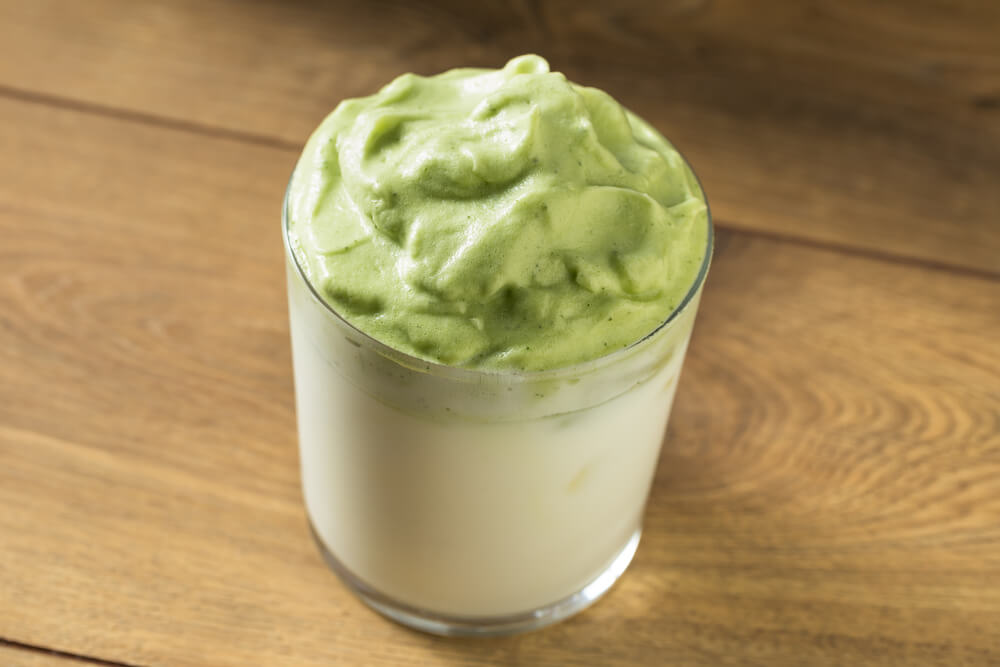
Three steps, and the whole process takes about 10 minutes once you have everything out.
Step 1. Beat The Egg Whites And Sugar.
Using an electric mixer on high speed — or a milk frother if that’s what you have — beat the egg whites or aquafaba in a small bowl until mostly stiff. Add the sugar a little at a time while continuing to beat. You’re looking for stiff peaks — the mixture should hold its shape when you lift the beater. This usually takes 3-5 minutes with an electric mixer.
In my experience, room temperature egg whites whip faster and hold peaks better than cold egg whites. Take them out of the fridge 15-20 minutes before you start if you can plan that far ahead.
Step 2. Add The Matcha Powder To Make Whipped Matcha.
Sift the matcha powder into the whipped egg whites a little at a time. Sifting is important — unsifted matcha tends to clump and creates green specks rather than a uniform color. Fold gently with a rubber spatula rather than stirring aggressively. You want to incorporate the matcha without collapsing the foam structure you just built. Don’t add matcha until the egg whites are fully whipped, or the oils in the matcha will interfere with the aeration process.
Step 3. Assemble The Drink.
Fill your glass with ice and pour your chosen milk over it. Spoon the whipped matcha foam over the top — don’t stir it in. Part of the experience is drinking through the foam layer and tasting the contrast between the unsweetened cold milk and the sweet matcha cloud on top. Add a straw and serve immediately. It photographs well too, which is honestly part of the appeal of this drink.
Ways To Customize Matcha Dalgona
That’s what makes matcha dalgona endearing to those of us who make drinks regularly — it’s genuinely flexible. A few variations that work well:
Add a few drops of vanilla extract to the egg whites before whipping for a vanilla-matcha combination that softens the grassier notes of the matcha. A pinch of cinnamon over the finished foam works surprisingly well. For something more dessert-like, use sweetened condensed milk instead of regular milk — it changes the character of the drink considerably but produces something decadent.
People who don’t like the texture of egg white meringue sometimes prefer whipped heavy cream as the topping instead. It’s less visually dramatic and doesn’t have the same structure, but it’s a valid alternative that some people prefer.
The Differences Between Matcha Dalgona And Dalgona Coffee
If you’ve seen the original dalgona coffee trend from 2020, you already know the basic concept. Dalgona coffee whips instant coffee granules, sugar, and hot water into a stiff foam that gets spooned over milk. The science behind it is that instant coffee contains an emulsifier that makes it whippable in a way that brewed coffee isn’t.
Matcha dalgona uses the same visual presentation but a fundamentally different structure. Instead of instant coffee granules doing the whipping work, egg whites or aquafaba provide the foam structure, with matcha folded in for flavor and color. The result is more delicate and needs to be consumed sooner before the foam starts to weep, but the flavor is its own thing — earthy, slightly bitter, and beautiful in color.
Raw Egg White Safety
The classic preparation uses raw egg whites, which carries a small salmonella risk. Pasteurized egg whites are widely available in the dairy section and eliminate that concern entirely — they behave identically to fresh egg whites when whipped and are what I recommend for this recipe. Aquafaba (the liquid from canned chickpeas) is the fully vegan alternative that also avoids any egg-related food safety concerns. If you use aquafaba, add the cream of tartar — it helps significantly with stability.
About Aquafaba

Aquafaba is the liquid from a can of chickpeas — it’s typically poured down the drain, but it has remarkable properties when whipped. The proteins and starches in the liquid behave similarly to egg whites under mechanical agitation. Drain a can of chickpeas, reserve the liquid, and you have your aquafaba. Combine it with non-dairy milk and the recipe is fully vegan without any meaningful compromise in the final result.
The Final Word On How To Make Matcha Dalgona
Matcha dalgona is straightforward once you understand the structure: whip egg whites or aquafaba to stiff peaks, fold in sifted matcha, spoon over cold milk and ice. The whole process takes about 10 minutes, the result is visually striking, and it tastes genuinely good. Use pasteurized egg whites or aquafaba for safety, sift the matcha carefully to avoid clumps, and don’t skip the folding step — it’s what keeps the foam light. If you liked this post, find out whether beaten coffee tastes better.
FAQs About How To Make Matcha Dalgona
What is the difference between matcha powder and green tea?
Both matcha powder and green tea are made from the same plant called Camellia Sinensis. Green tea is simply leaves of this plant that are often packed into a teabag. Matcha powder is green tea leaves ground into a fine powder.
It is very potent because of its concentrated form.
What are the health benefits of matcha?
Matcha powder has many health benefits. It is loaded with antioxidants, which fight cancer, and it may improve liver function. Matcha also improves brain function and may improve heart health.
Additionally, certain components in green tea powder may help you lose weight by speeding up your metabolism.
Can you make your own matcha powder?
Matcha powder is readily available on Amazon, and it’s likely that you can find it at your local grocery store. Even places like Target may carry matcha powder. You can also grind green tea leaves with a mortar and pestle, but don’t forget to sift it, so that is a very fine powder before you use it.
What We Actually Do Differently
Full disclosure: we’ve made this recipe dozens of times, and here’s how we’ve tweaked it for our taste:
The measurements above are a solid starting point, but matcha intensity is deeply personal. We usually bump up the matcha by about 15% because we like it punchy. If you’re sensitive to bitterness, scale back slightly — matcha gets noticeably bitter when over-concentrated.
Matcha quality makes a noticeable difference here. Anything within the last year and stored properly works great. Matcha that’s been sitting open for months? You’ll taste the staleness and the color will be duller. Not a dealbreaker for a casual weekday drink, but worth knowing.