
No, Nespresso pods do not fit Dolce Gusto machines. The systems use different pod designs and brewing mechanisms.
Nespresso uses small aluminum capsules while Dolce Gusto uses larger plastic pods. They are not interchangeable.
Why Are the Pods of These Two Machines Not Compatible?
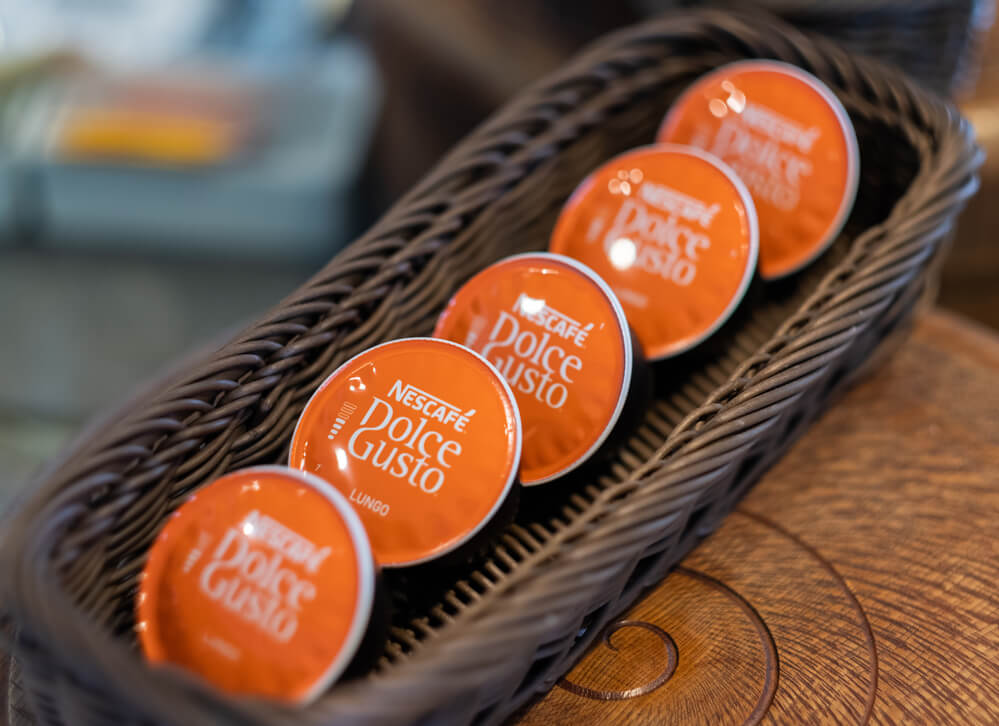
Although both the Nespresso and Dolce Gusto brands are manufactured by the same company, it should actually come as no surprise to you that you cannot use the pods of these two brands interchangeably. It is quite typical for different coffee machines to use pods of different materials, sizes, and materials.
The reasons for this include that manufacturers obviously stand to make much more money by selling proprietary pods together with their coffee makers. While consumers tend to hold on to their coffee makers for many years, they constantly need to stock up on coffee pods.
Also, manufacturers cannot vouch for the quality of third-party capsules. By investing in proprietary pods, you are assured that they will not damage your machine in any way and that your coffee will be of a certain standard. However, third-party pods are typically OK, especially if you opt for popular brands.
You may also be interested in our guide on how are coffee pods made.
Nespresso Pods vs. Dolce Gusto Pods
So, how do Nespresso pods differ from Dolce Gusto pods? Well, Nespresso pods come in two different shapes. If your Nespresso is from the OriginalLine series, your machine will take pods that are cylinder-shaped. Since OriginalLine coffee makers are no longer under patent, you can use third-party pods in these machines.
VertuoLine pods, on the other hand, are dome-shaped and bar-coded, which is why you can only use proprietary pods in VertuoLine machines. OriginalLine and VertuoLine machines actually use different brewing methods.
While OriginalLine machines use a high-pressure pump, which is similar to the system used in actual espresso machines, VertuoLine machines work with a centrifugal system.
Dolce Gusto pods differ from those used in Nespresso OriginalLine and VertuoLine machines since they have a bowl shape. As is the case with the OriginalLine series, Dolce Gusto machines work with a pressure pump. While OriginalLine machines work with 19 bars of pressure, Dolce Gusto machines feature 15-bar pumps.
Nespresso Machines vs. Dolce Gusto Machines
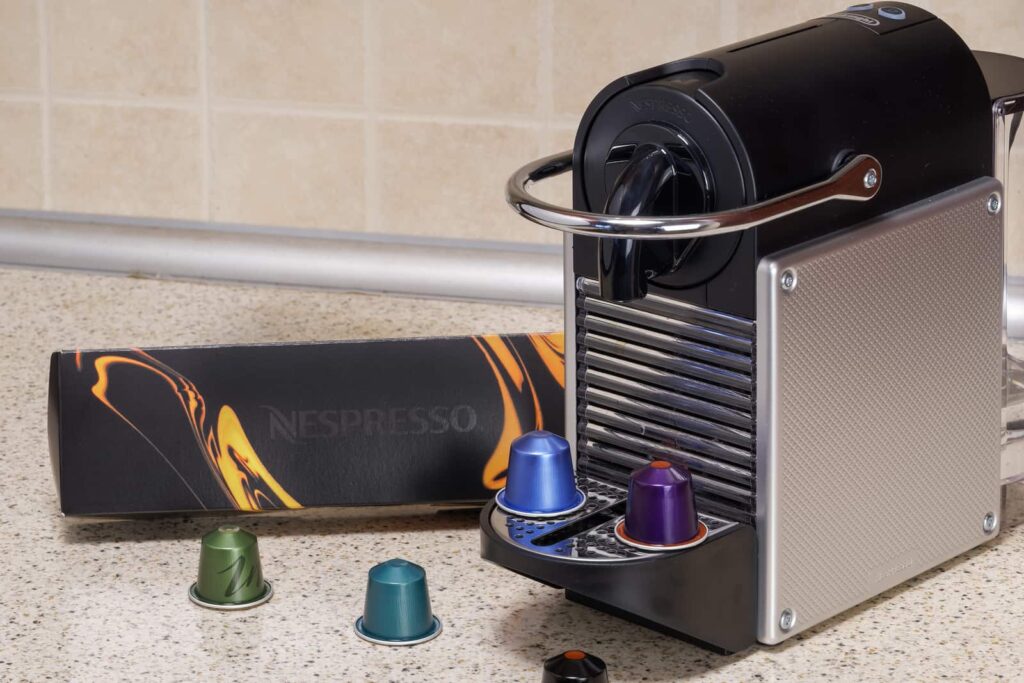
Nespresso machines come in a wide range of models, which produce a variety of espresso-style beverages, including espresso, ristretto, lungo, and mugs of coffee. You can also choose from a wide selection of coffee pods that come in different sizes and flavors.
Dolce Gusto machines are a better option if you’re budget-conscience since they are a bit cheaper than Nespresso machines. Also, you can make other types of beverages with the Dolce Gusto besides espresso, such as cappuccinos and lattes. While these machines don’t come with a milk frother, pods that produce milky drinks include powdered milk.
What About Capsule Adaptors?
If you’re in a situation where you’d like to use Nespresso pods in your Dolce Gusto machine or Dolce Gusto pods in your Nespresso machine, the good news is that you can invest in a capsule adaptor.
These adaptors by Cafilas are designed to fit in Dolce Gusto machines. On the inside, however, they’re shaped to house the Nespresso Original pods of your choice.
To use an adaptor, you simply remove the original capsule holder and replace it with the capsule adaptor. You then place the relevant capsule into the capsule adaptor and brew your coffee like normal.
The Last Word on Do Nespresso Pods Fit Dolce Gusto?
While those who are into quality espresso-style drinks should opt for the Nespresso, the Dolce Gusto is better suited to consumers who enjoy a variety of beverages. If you want to use the pods of one brand in the machine of another, however, you can invest in a capsule adaptor.
FAQs on Do Nespresso Pods Fit Dolce Gusto
Does Nespresso Provide Pods With Milk Powder Inside?
No, Nespresso machines produce only black espresso-style beverages. However, some machines come with a milk frother attached.
Are There Coffee Machines That Work With All Pods?
Although a coffee machine that works with all pods doesn’t exist, multi-capsule coffee machines are available on the market. These types of machines come with a series of adapters that allow you to insert different types of pods.
Our Testing Notes
We’ve tested this brewing method extensively in our coffee lab, and here’s what the data doesn’t always tell you:
Water temperature matters more than most guides suggest. We found that 200-205°F consistently produced better extraction than the often-recommended 195°F. The difference was especially noticeable with lighter roasts—underheat them and you get sour, underwhelming coffee that wastes good beans.
The grind size recommendations online are a starting point, not gospel. Your specific grinder, beans, and even altitude affect optimal grind. We keep a brewing journal and adjust by one click finer or coarser until dialing in a new bag. Takes about 3 brews to nail it.