
Plain coffee pods are generally not inherently less healthy than coffee brewed another way. The most important health variables are the amount of caffeine you consume, any sugar or other ingredients added to the pod, and your individual sensitivity—not the pod format by itself. Materials and environmental waste are reasonable questions, but they should not be confused with proof that pod coffee is harmful.
This guide separates established facts from claims that manufacturers, headlines, or social posts have not demonstrated. It is general information, not personal medical advice. People who are pregnant, take medications, or have a condition affected by caffeine should ask a qualified healthcare professional about an appropriate limit.
Coffee-pod health at a glance
| Question | Practical answer |
|---|---|
| Is plain pod coffee unhealthy? | Not simply because it came from a pod. Caffeine amount and personal tolerance matter more. |
| Are all pods just coffee? | No. Plain pods may contain only roasted ground coffee; latte, cocoa, and flavored products can contain other ingredients. |
| Are K-Cups plastic? | Keurig says its K-Cup pods use recyclable #5 polypropylene. Local recycling acceptance varies. |
| Do Nespresso capsules touch bare aluminum? | Nespresso says a food-grade lacquer separates its coffee from the aluminum. That is a manufacturer statement, not a reason to make absolute medical claims. |
| What is the simplest choice? | Choose a plain pod with a short ingredient list and track the caffeine in all drinks you consume that day. |
1. Start with caffeine, not the capsule
Pod coffee contains caffeine unless the product is decaffeinated. The exact amount varies by coffee, capsule size, and beverage setting, so the package or manufacturer is a better source than a universal estimate. The U.S. Food and Drug Administration says that, for most adults, 400 milligrams per day is an amount not generally associated with negative effects. It also stresses that sensitivity and metabolism vary considerably.
Too much caffeine can contribute to insomnia, anxiety, jitters, an upset stomach, headache, increased heart rate, or palpitations. A pod machine can make repeated servings unusually convenient, so count cups rather than assuming a small capsule means a small daily dose. Decaf also contains a little caffeine.
2. Check what is actually inside the pod
Many unflavored coffee pods contain roasted ground coffee and nothing else. However, a product called a “pod” might instead be a sweetened cappuccino, latte, cocoa, or flavored beverage. Those products can contain sugar, milk powder, flavorings, or other ingredients and may have a very different calorie and allergen profile. Compare the labels of specific products rather than assuming every option in a list of Nespresso coffee pods has the same ingredients.
Read the ingredient list and nutrition panel for the exact box you are buying. Descriptive flavor notes such as “cocoa” on a plain coffee do not necessarily mean cocoa was added, while a latte-style capsule may contain several ingredients. If you want the simplest option, choose a plain coffee pod and add milk or sweetener yourself so you control the amount.
3. Pod materials differ by system
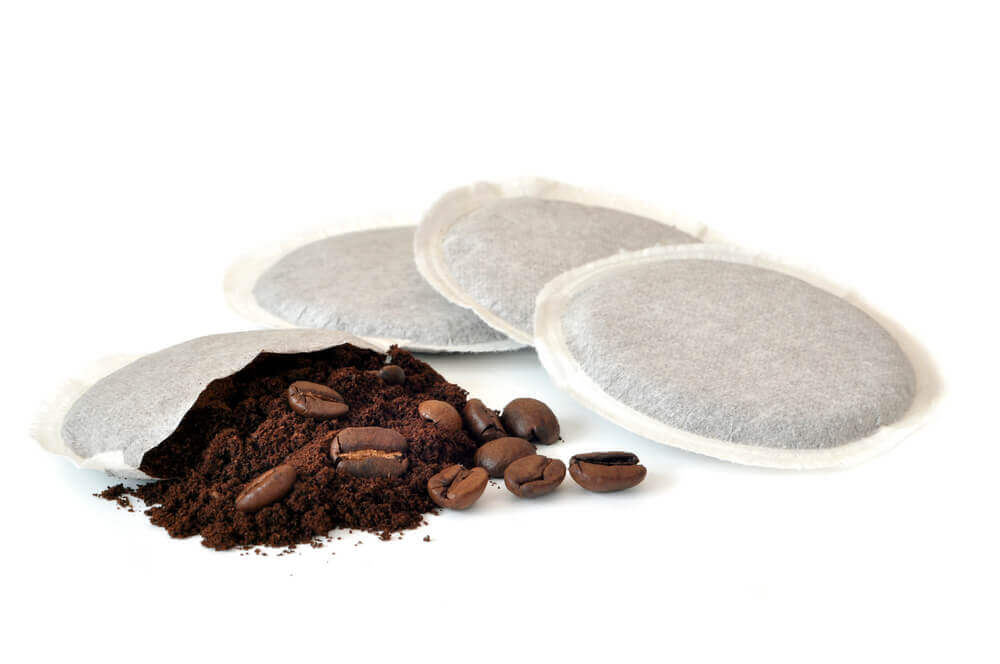
“Coffee pod” is an umbrella term. Nespresso capsules are primarily aluminum, Keurig says its current K-Cup pods are #5 polypropylene, and soft pods may use filter paper. Compatible third-party products can use different constructions. Our guide to coffee pods versus coffee capsules explains the terminology and machine compatibility.
Nespresso states that a food-grade lacquer separates the ground coffee from its aluminum capsule. Keurig states that its pods are made from recyclable polypropylene. These official descriptions are useful for identifying materials, but neither warrants a sweeping promise that every compatible pod is identical or that a product creates “zero” exposure under every possible condition. Buy intact products intended for your machine, follow the brewer instructions, and discard damaged or swollen capsules.
4. Furan is a coffee question, not only a pod question
Furan and related compounds form naturally when foods are heated, including when coffee is roasted. The European Food Safety Authority has identified possible long-term concern from dietary exposure and notes that preparation methods affect how much volatile furan remains. That does not support describing pods as uniquely poisonous: coffee is one of several food sources, and the issue also applies to other brewing methods.
EFSA reported low concern for average exposure among most consumers but greater concern for high consumers, with remaining scientific uncertainty. That is more nuanced than either “pods are toxic” or “there is absolutely no risk.” People concerned about their overall exposure should discuss their diet with a healthcare professional rather than relying on one alarming headline.
5. Machine hygiene matters
A brewer that holds water, coffee residue, or milk needs routine care regardless of whether it uses pods. Empty removable drip trays, wash parts according to the manufacturer’s directions, replace water rather than leaving it indefinitely, and follow the specified descaling schedule. Milk systems require especially prompt cleaning.
Do not use a damaged machine or improvise harsh cleaners that the manufacturer does not approve. Hygiene claims online often jump from finding residue in a neglected appliance to asserting that every pod brewer is dangerous. Regular cleaning is the proportionate response.
6. Environmental impact is real but separate from health
Single-use packaging creates waste even when the beverage itself is suitable for you. A technically recyclable pod may still be rejected by a local facility because it is too small, contains mixed materials, or has not been emptied. Check your local program rather than placing every capsule in curbside recycling automatically.
Manufacturer take-back programs, compatible compostable products, and reusable coffee pods may reduce waste, but each has tradeoffs. Compostable packaging may require an industrial facility; reusable capsules require correct filling and cleaning; take-back programs require collection and shipping. Choose a system you will actually use correctly.
7. Who should be more cautious?
People vary widely in their response to caffeine. The FDA advises discussing limits with a healthcare provider if you are pregnant, trying to become pregnant, breastfeeding, taking medication, or concerned about a medical condition. Children and teenagers also should not be treated as smaller versions of healthy adults when deciding on caffeinated drinks.
If coffee repeatedly causes palpitations, severe anxiety, digestive symptoms, or disrupted sleep, changing from a pod to another brewer may not solve the underlying caffeine response. Consider a lower-caffeine serving, decaf, fewer cups, or professional guidance appropriate to your situation.
Are aluminum pods healthier than plastic pods?
There is not enough evidence here to rank every aluminum product as “healthy” and every plastic product as “unhealthy.” Material, inner coatings, manufacturing quality, heat, damage, ingredients, caffeine dose, and actual use all matter. Choose products designed for the brewer from a traceable manufacturer and avoid absolute claims that go beyond the available evidence.
Are flavored coffee pods bad for you?
Not automatically. Some contain only coffee with flavoring, while latte or dessert-style products may add sugar, milk powder, or other ingredients. The label—not the flavor name alone—tells you what you are consuming. Compare calories, added sugar, allergens, and serving size with your own dietary needs.
Bottom line
For most adults, a plain coffee pod is primarily another delivery format for coffee. Choose an intact product intended for your machine, read the ingredient label, keep the brewer clean, and track total caffeine. Treat packaging waste as a legitimate environmental issue, but do not mistake it for proof that pod coffee itself is uniquely harmful. For flavor, cost, and convenience—not medical claims—see our comparison of coffee pods versus ground coffee.